← Commonplace
A Commonplace Book Commonplace

Interpretive essays on quotes worth keeping — a commonplace book, read and re-read.

Reason, Truth & Knowledge

Markham on Self-Knowledge and the Human Mirror

"You can live a lifetime and, at the end of it, know more about other people than you know about yourself."

— Beryl Markham, aviator and author, West with the Night (1942)

Analytical Interpretation

Background and Context

The line opens West with the Night (1942), Beryl Markham's memoir of a childhood in British East Africa, a life spent training racehorses and flying mail and passengers across a roadless Kenya, and the record solo Atlantic crossing that made her briefly famous. It is not delivered as philosophy. It surfaces in the book's first pages — the chapter "Message from Nungwe" — as the opening move of a meditation on solitude, before the memoir turns to landscape, horses, and the machinery of flight. That placement matters interpretively: this is a woman whose whole life was spent reading the external world with life-or-death precision — a horse's temper, a headwind, an unlit airstrip at night — pausing at the outset to admit that the one thing all that acuity never learned to read was herself. The forensic record, including a genuine dispute over who actually wrote the book, sits in Provenance; what matters here is the vantage — outward-facing expertise, turned for a moment inward, and startled by the imbalance.

Interpretation

The sentence names an asymmetry of attention. We spend our lives decoding other people — watching their choices, weighing their moods, building working models of everyone we meet — and we do it so continuously that we mistake the fluency for wisdom. Markham's claim is that all that outward skill can accumulate into a lifetime and leave its center dark. The phrase "at the end of it" is doing quiet, heavy work: it frames the whole thing as a reckoning, the accounting you do when there's no more time to fix the ledger. You arrive at the finish an expert on everyone but yourself.

What lifts the line above tidy irony is what Markham says next — the continuation the famous one-liner usually amputates. "You learn to watch other people," she writes, "but you never watch yourself because you strive against loneliness. If you read a book, or shuffle a deck of cards, or care for a dog, you are avoiding yourself." This is the real payload. The failure to know oneself is not laziness or shallowness; it is a defense. Watching others is how we escape the unbearable quiet of our own company. Every book, every card game, every tended animal — every glance outward — is, in her reading, a small flight from the interior. And she refuses to scold us for it: "The abhorrence of loneliness is as natural as wanting to live at all." The evasion is not a character flaw. It is a survival reflex, as deep as the will to live.

That reframing is what makes the quote unsettling rather than merely wise. It says self-ignorance is not a gap to be filled with more effort but a wall we build on purpose, because the alternative — sustained, unaccompanied attention to ourselves — feels like a kind of dying. The social gaze is not just easier than self-knowledge; it is anesthetic. We outsource our sense of who we are to the mirror of other people precisely because the mirror is warm and populated, and the interior is neither. The tragedy Markham points to is that the same instinct that lets us live in the world — our hunger for others, our horror of solitude — is the instinct that keeps us strangers to ourselves. You can be intensely, expertly engaged with everything and everyone, and use that engagement, all your life, to never once be alone with the person doing the engaging.

Current Relevance

Markham wrote this before television, let alone the feed. Read now, it sounds like a diagnosis of a condition we've since built an entire economy around. We have engineered the perfect machine for watching other people — endless, frictionless, always available — and named it connection. We know how strangers vote, what they ate, whom they're angry at, what they fear at 2 a.m. We are fluent readers of everyone. And Markham's continuation explains why the machine is so irresistible: it is the most effective avoidance of the self ever devised, a way to never be alone with yourself that fits in a pocket and never runs out. The old escapes she named — the book, the cards, the dog — at least had bottoms; the scroll does not. What she framed as a natural reflex against loneliness has been industrialized into a reflex we perform a hundred times a day, each time trading a moment of self-company for a moment of company with someone we'll never meet. The result is the exact imbalance she warned of, at scale: a civilization of expert observers who could describe anyone but themselves.

Impact and Legacy

For decades the line, and the book carrying it, nearly vanished. West with the Night sold modestly in 1942 and fell out of print; Markham drifted back into obscurity and near-poverty in Kenya. Its resurrection is one of publishing's better stories: in the early 1980s a California restaurateur, George Gutekunst, read a collection of Ernest Hemingway's letters and stumbled on Hemingway's astonished praise — that Markham "has written so well, and marvelously well, that I was completely ashamed of myself as a writer… she can write rings around all of us who consider ourselves as writers." Gutekunst tracked the book down, championed a 1983 reissue, and it became a surprise bestseller, restoring both the memoir and its author to the canon of adventure and nature writing. The self-knowledge passage has since become the book's most-quoted line — its thematic signature, the sentence anthologies lift and posters shrink. Its staying power comes from the same quality Hemingway envied: it states something most people privately suspect and never manage to phrase, and it does so without a trace of the self-help uplift that would have dated it.

Contrasting Views or Controversies

  • The social mirror is a route to the self, not a detour from it. A long tradition in psychology — Cooley's "looking-glass self," Mead's social formation of identity — holds that we only come to know ourselves through others; that there is no pristine inner self waiting to be watched, only a self assembled from a lifetime of reflections. On this view Markham sets up a false rivalry: knowing others deeply and knowing yourself are not competing activities but the same one.
  • More introspection doesn't mean more accuracy. Markham's implied prescription — watch yourself harder — runs into an awkward finding: research on the "introspection illusion" (Nisbett and Wilson, and much since) suggests we have poor privileged access to our own motives, and that sustained self-scrutiny often produces confident stories rather than true ones. The lonely inward gaze can manufacture self-knowledge as easily as discover it.
  • The book's own authorship is contested — which cuts strangely close. Markham's third husband, the professional writer Raoul Schumacher, claimed after their marriage that she had not written West with the Night at all. Biographers, chiefly Mary S. Lovell, have adjudicated the dispute in Markham's favor — manuscript batches went to the publisher before Schumacher was involved — reducing his role to editing. But the shadow is a fitting one: a sentence about how little we finally know of the self, housed in a book about which the world briefly wondered whose self wrote it. The controversy doesn't undermine the line; it haunts it.

Practical Application

  • Run the ratio. Treat the quote as a diagnostic: across a given day, how much of your attention went outward — reading, judging, tracking other people — and how much was spent, un-anesthetized, on yourself? The imbalance is the finding.
  • Notice the avoidances for what they are. Markham's list — the book, the cards, the dog — updates easily: the phone, the feed, the perpetual second task. The practice isn't to renounce them; it's to catch the moment of reaching and ask what quiet you're reaching away from.
  • Practice deliberate solitude, not just alone-time. Being physically alone while fully occupied is still avoidance. The skill is unaccompanied attention — a walk without earbuds, a page without a screen — long enough for the interior to actually surface.
  • For leaders and creatives: the same analytic precision you aim at markets, teams, or characters is a tool you can turn around. The rarest professional skill is not reading the room but reading the one person in it you're most motivated to misread.

Background on the Author

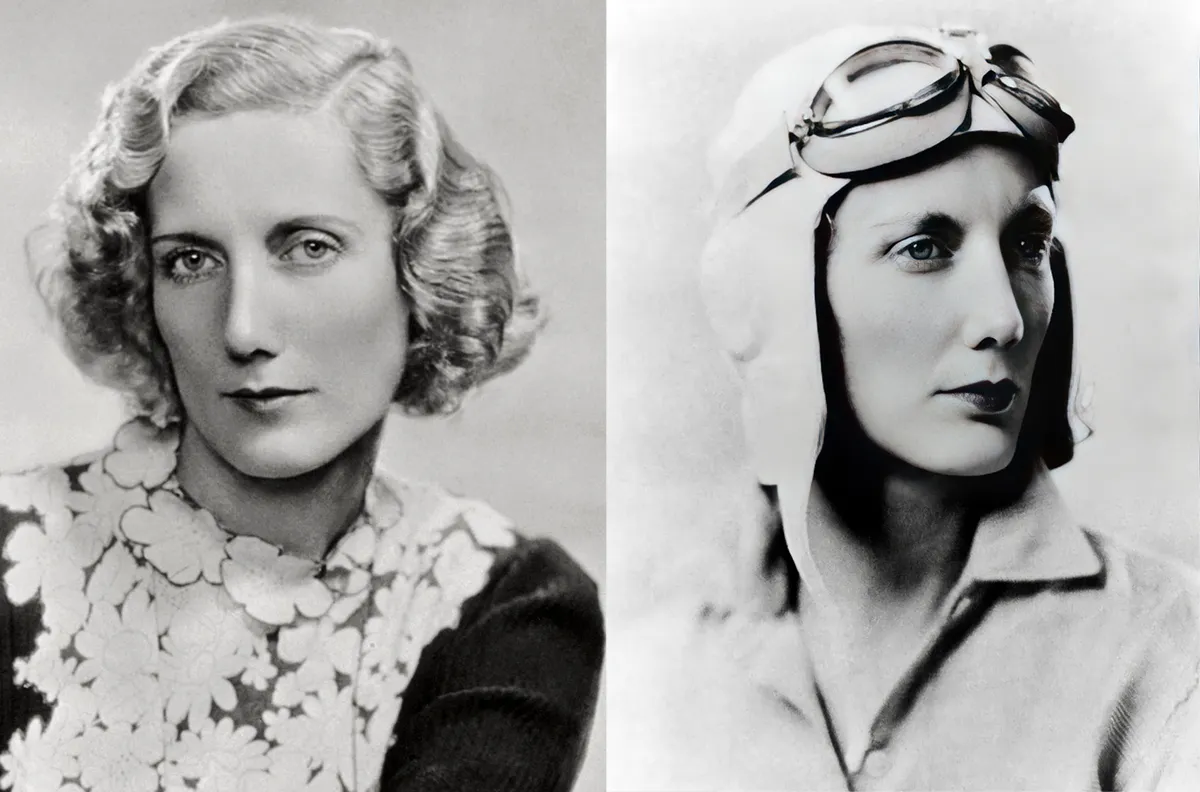
Beryl Markham (1902–1986) was born in England and raised from age four in British East Africa (now Kenya), largely among the Nandi and Kipsigis, after her father moved the family to farm and train horses. She became a licensed racehorse trainer while still in her teens, then one of Africa's first bush pilots, flying mail, supplies, and passengers — and spotting elephant for safaris — across territory with no runways and no rescue. In September 1936 she flew solo and nonstop across the Atlantic from England to North America, against the prevailing winds, crash-landing in a Nova Scotia bog but completing the first such east-to-west crossing. West with the Night was her only book. What authorizes the claim is exactly the shape of that life: not a philosopher's, but a professional watcher's — someone whose survival depended, daily, on reading horses, weather, and terrain with total accuracy, and who was therefore in a position to notice, with unusual authority, the one subject all that watching had skipped.


Perspectives

The Face You Never Get to Read

Anyone who reads people for a living knows the private version of this sentence. You get good — genuinely good — at the flick of attention that tells you who's celebrating and who's drowning, who wants to talk and who wants to be left with their drink. You collect people all night. And then the room empties and you realize the one face you never once got a clean read on was your own, because you were too busy, and being busy was the point.

That's the part of Markham that stops me: she doesn't call it a flaw. She calls it striving against loneliness — and then says that striving is "as natural as wanting to live at all." I feel the truth of that in my teeth. All the watching, all the curiosity I'm proud of, is also, on its worst days, a very sophisticated way of not being alone in a room with myself. The book, the cards, the dog. The next person's story. The next drink's confession. Anything with a pulse that isn't mine.

What I love is that she leaves us no clean exit. She won't let self-knowledge be a virtue you simply choose over distraction, because she's shown the distraction is load-bearing — pull it out and you're left with the exact silence you built the whole life to avoid. So the honest takeaway isn't "know thyself." It's gentler and harder than that: notice, just once tonight, the moment you reach for someone else's face to keep from turning around. You don't have to turn around. Just clock that you flinched.


Earlier Analytical Interpretation (2025-12-21)

Background and Context

Beryl Markham's words emerge from a life steeped in movement, challenge, and independence. As one of the first female bush pilots in Africa and the first woman to fly solo across the Atlantic from east to west, she navigated both literal and metaphorical frontiers. Her memoir, West with the Night (1942), is less an autobiography and more a poetic meditation on solitude, freedom, and identity forged in wild landscapes.

This quote does not appear amid philosophical discourse or overt introspection; it slips quietly into the narrative—subtle, unforced, and hauntingly true. Its power lies in its simplicity: the stark contrast between the attention we give others and the evasion we often practice with ourselves.

Interpretation

Markham's observation speaks to the asymmetry of human perception. We spend our lives decoding others—watching their choices, hearing their stories, making sense of their contradictions. Yet in doing so, we often bypass the more difficult, less flattering terrain of our own inner lives.

The phrasing "at the end of it" suggests not just the passage of time, but the reckoning that comes with mortality. This is not a call to action; it's a quiet indictment of our habits. The juxtaposition—"know more about other people than you know about yourself"—is not merely ironic. It points to an existential imbalance: our outward gaze is socially sanctioned and structurally reinforced, while self-inquiry remains uncomfortable, private, and often postponed.

Beneath this observation is a deeper existential caution: it's possible to live fully engaged in the world and still remain a stranger to oneself.

Current Relevance

In the age of hyperconnectivity, Markham's insight gains sharper edges. We track, scroll, analyse, and react to others' lives in real-time—social media has made us chronic observers, commentators, even curators of other people's narratives.

And yet, the tools of introspection—silence, solitude, reflection—are increasingly eroded. We know how others vote, what they eat, where they travel, and what they fear. But our own motivations often remain opaque, buried beneath layers of adaptive behavior and external validation.

Markham's quote becomes a cautionary metric for modern life: the ratio between external attention and internal awareness. If tilted too far outward, we risk not only misunderstanding ourselves but losing the ability to stand apart from the currents we swim in.

Impact and Legacy

This line has outlived its context because it echoes something fundamental and unresolved. Markham's work, long overlooked, has experienced a renaissance—praised for its lyrical prose and rare interiority. Hemingway allegedly admired her writing so deeply that he claimed she "can write rings around all of us who consider ourselves as writers."

This quote stands as a kind of thematic signature: an observation shaped by solitude, sharpened by danger, and refined through witness. It lingers because it's not prescriptive. It merely describes a truth many suspect but rarely articulate.

Contrasting Views or Controversies

Some might argue the quote underestimates how deeply we can come to know ourselves through others—through relationships, conflict, love, and loss. From a psychological standpoint, social mirrors are a major part of identity formation. Others suggest that introspection, when pursued excessively, can become self-indulgent or paralysing.

But Markham isn't dismissing relationships or insight gained from them. Her critique targets imbalance—how easy it is to outsource self-understanding to observation rather than integration. Her point is not that we shouldn't know others deeply. It's that we often stop there.

Practical Application

This quote can be used as a diagnostic: How much of your attention is turned inward vs outward? When you interpret others' motives, are you projecting, avoiding, or genuinely understanding?

It encourages practices like journaling, intentional solitude, and disciplined self-reflection—not in a performative or spiritualised sense, but in the raw, often uncomfortable territory of self-honesty. It also supports the cultivation of personal epistemology: how do you come to know what you know about yourself?

In leadership, relationships, and creative work, it suggests the necessity of alignment between internal clarity and external perception.

Background on the Author

Beryl Markham (1902–1986) was born in England but raised in British East Africa (now Kenya). She became a renowned horse trainer before transitioning into aviation. Her solo transatlantic flight in 1936 from England to North America against prevailing winds was a technical and physical triumph. She later turned to writing, though her literary legacy remained in obscurity until rediscovered in the 1980s.

West with the Night remains her only book, but its fusion of poetic prose, understated philosophy, and raw adventure makes it a singular work in both aviation and literary history. Her voice is that of an observer—a woman on the edge of the world, and often on the edge of self—speaking not loudly, but with unsettling clarity.

Additional Images

Provenance — researched 2026-07-02
  • Attributed to: Beryl Markham (1902–1986), British-born Kenyan aviator, racehorse trainer, and author. Verdict: VERIFIED.
  • Source: Beryl Markham, West with the Night (Boston: Houghton Mifflin Company, 1942), Chapter 1, "Message from Nungwe." The line is the opening sentence of the book's first meditation, one of its most-quoted passages.
  • Wording: The filed sentence is verbatim correct, but it is the first sentence of a longer passage that the popular one-liner usually truncates. The full meditation reads: "You can live a lifetime and, at the end of it, know more about other people than you know about yourself. You learn to watch other people, but you never watch yourself because you strive against loneliness. If you read a book, or shuffle a deck of cards, or care for a dog, you are avoiding yourself. The abhorrence of loneliness is as natural as wanting to live at all. If it were otherwise, men would never have bothered to make an alphabet, nor to have fashioned words out of what were only animal sounds, nor to have crossed continents — each man to see what the other looked like." The block quote is kept as the recognized short form (an honest excerpt, not an error); the continuation is preserved here and drawn on in the interpretation.
  • Authorship dispute (noted, resolved): Markham's third husband, the professional writer Raoul Schumacher (married 1942), claimed after their marriage that she had not written the book. The scholarly consensus, led by biographer Mary S. Lovell (Straight On Till Morning, 1987), holds Markham as the author, with Schumacher an editor — the decisive evidence being that Markham was sending manuscript batches to Houghton Mifflin before Schumacher entered the picture. Characterization: a contested claim from a self-interested spouse, adjudicated by biographers in Markham's favor.
  • Note on rediscovery: the book fell out of print after 1942 and was revived in a 1983 reissue after restaurateur George Gutekunst encountered Ernest Hemingway's praise of it in Hemingway's published letters ("she can write rings around all of us who consider ourselves as writers"), whereupon it became a bestseller.
  • Citations (Chicago):
    • Markham, Beryl. West with the Night. Boston: Houghton Mifflin Company, 1942. (First edition; the passage opens Chapter 1, "Message from Nungwe.")
    • Markham, Beryl. West with the Night. San Francisco: North Point Press, 1983. (Widely available modern reissue.)
    • Lovell, Mary S. Straight On Till Morning: The Life of Beryl Markham. New York: St. Martin's Press, 1987. (On the authorship dispute.)